
Piercing Services at
CRITICAL PIERCINGS
Kettering
What do you pierce? And will it hurt?
See below for general piercing types offered, and a tongue-in-cheek pain level score!
Pain is subjective - this is a general guide based on professional experience. Pain levels vary from person to person. Stress, anatomy, and adrenaline all play a role. If you’re nervous, speak to your piercer.
I’ll always talk you through it.
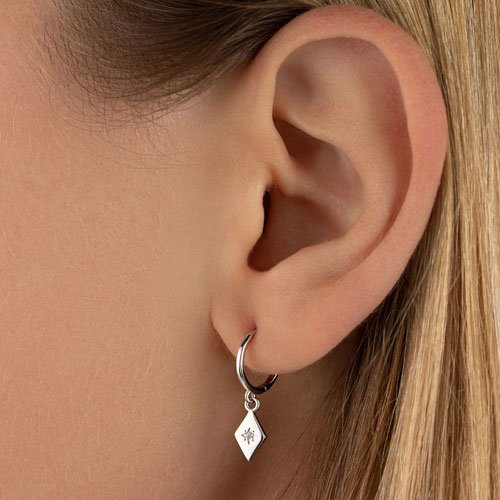
Ear Lobe
The classic ear piercing. Soft tissue, quick to perform, and heals relatively fast.
Good to Know: Great first piercing. Minimal swelling and usually no bleeding beyond a small dot.
Pain level 2/10
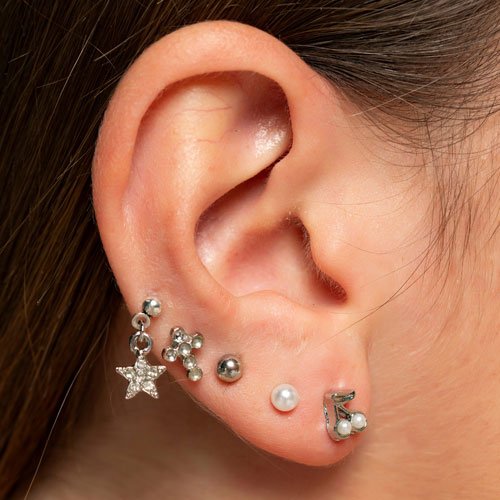
Upper Lobe
Still classed as ear lobe but closer to cartilage, giving a slightly firmer feel.
Good to Know: Heals slower than standard lobes but still beginner friendly.
Pain level 3/10

Helix
Piercing through the upper ear cartilage.
Good to Know: More pressure than sharp pain. Can ache for a few days afterwards.
Pain level 5/10
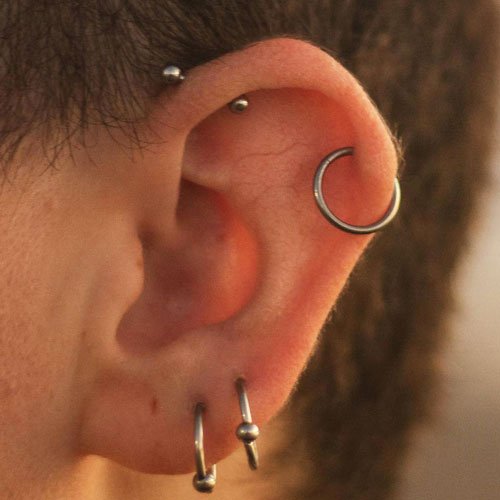
Forward Helix
Placed at the front of the ear where cartilage is thicker.
Good to Know: Swells easily and requires precise placement due to anatomy differences.
Pain level 6/10
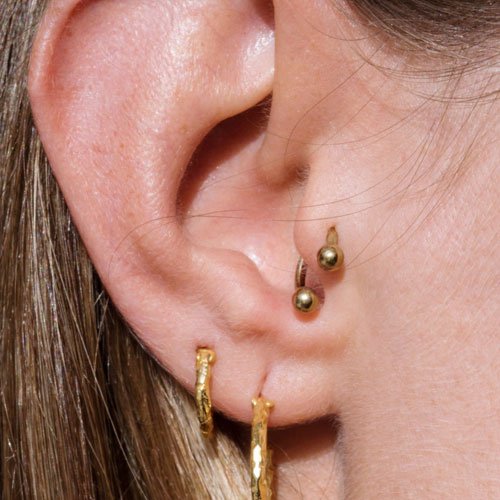
Tragus
The small flap of cartilage in front of the ear canal.
Good to Know: Clients often hear a crunch sound - totally normal and harmless.
Pain level 4/10

Conch
Placed in the centre cartilage of the ear, either inner or outer.
Good to Know: A deep pressure sensation. Swelling can feel intense for a few days.
Pain level 6/10
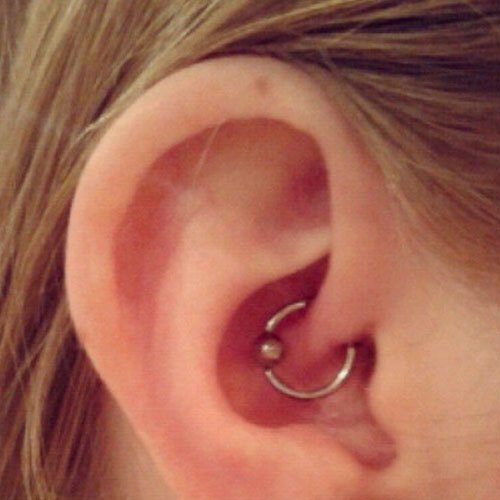
Daith
Pierced through the innermost cartilage fold of the ear.
Good to Know: Tricky anatomy-wise. Feels more uncomfortable than painful.
Pain level 6/10
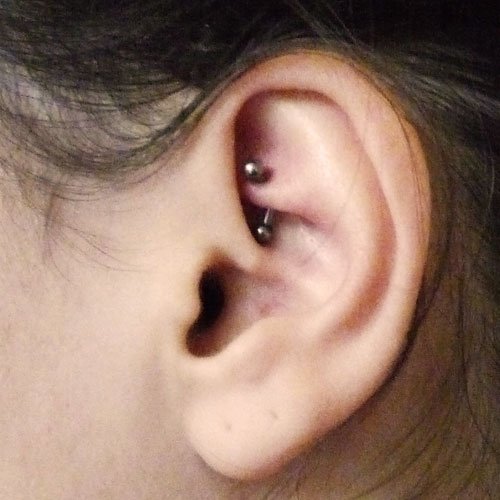
Rook
Through the ridge of cartilage above the daith.
Good to Know: Thick cartilage = more pressure. Expect tenderness during healing.
Pain level 7/10
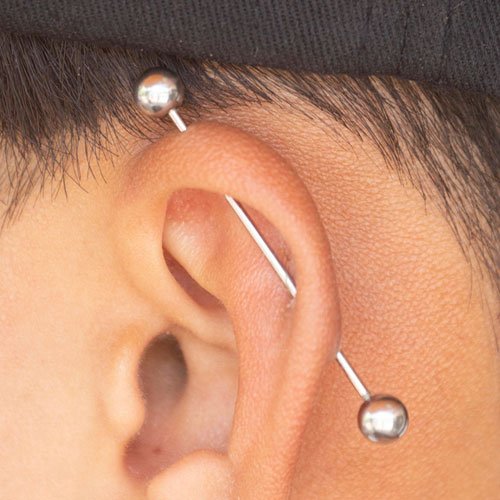
Industrial / Scaffold
Two cartilage piercings connected by one bar.
Good to Know: Anatomy dependent. Healing can be long and requires commitment.
Pain level 8/10
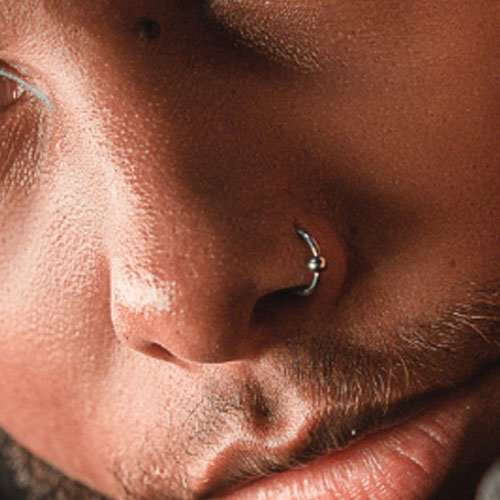
Nose Piercings
Nostril, High Nostril - Pierced through cartilage or soft tissue depending on placement.
Good to Know: Nose piercings can make your eyes water. The nose is connected to the tear ducts - similar to pulling a nose hair. Totally normal and temporary.
Pain level 5-6/10
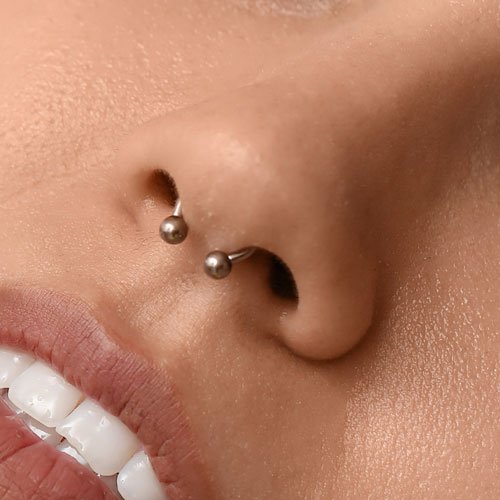
Septum
Placed through the “sweet spot” between cartilage.
Good to Know: Often less painful than expected. Skilled placement is everything.
Pain level 4/10 when done correctly
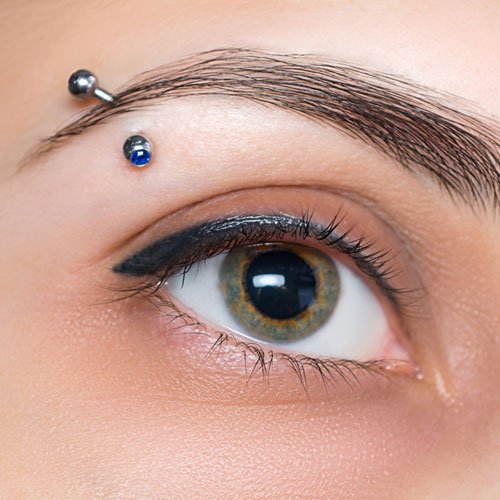
Eyebrow
A surface piercing through the eyebrow ridge.
Good to Know: Bruising is common - yes, you can get a black eye. Swelling usually settles within a week.
Pain level 4/10
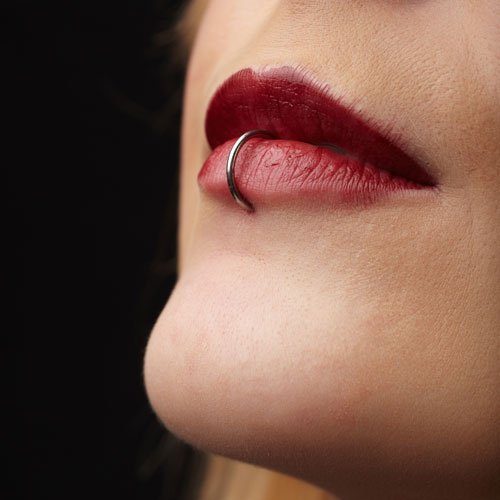
Lip
Labret, Medusa, Monroe, etc. Pierced through the lip tissue.
Good to Know: Swelling can be dramatic for the first few days. Longer bars are used initially and will need changing.
Pain level 5/10
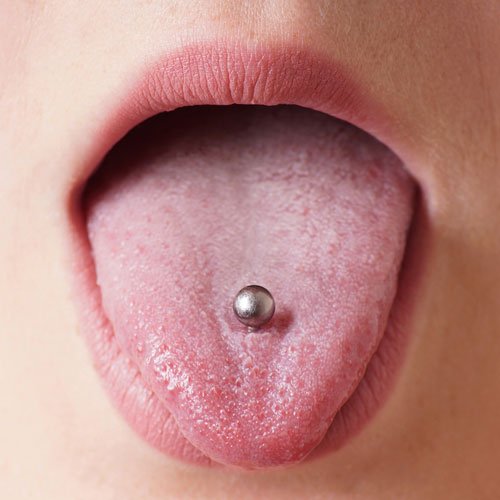
Tongue
Vertical piercing through the centre of the tongue.
Good to Know: Swelling is intense but short-lived. Speech may be funny for a few days.
Pain level 6/10
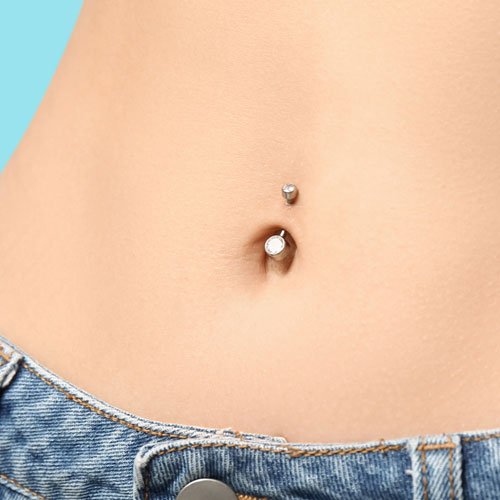
Navel / Belly Button
Pierced through the upper rim of the belly button.
Good to Know: Heals slowly and is anatomy-dependent. Snagging is the biggest issue.
Pain level 4/10
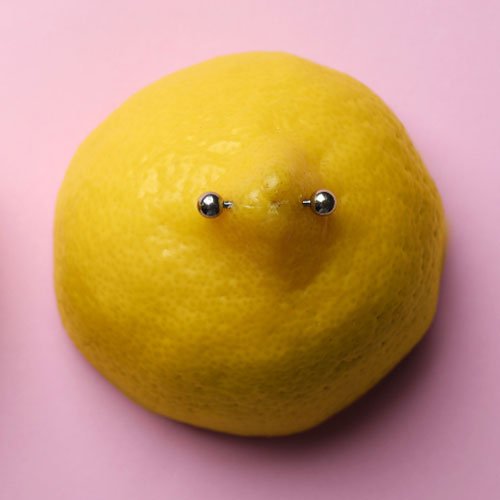
Nipple
Pierced horizontally or vertically through the nipple.
Good to Know: Sharp but quick. Often followed by a burning sensation.
Pain level 8/10
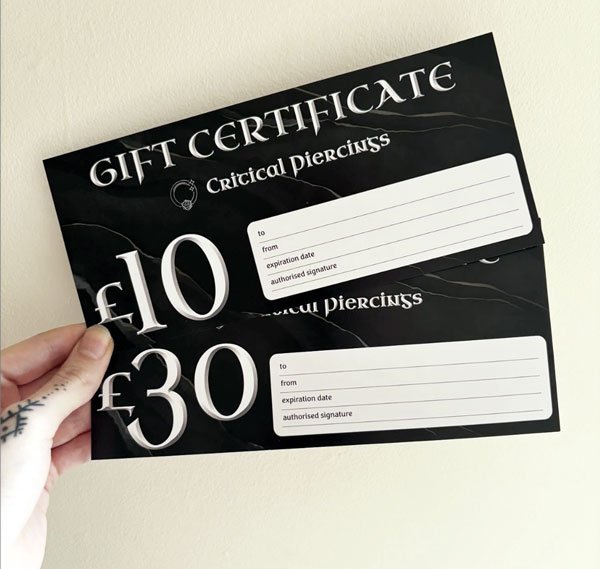
Gift Vouchers Available
If you're stuck for a gift, grab a piercing gift certificate!
By Appointment Only
Please get in touch to book your appointment